A Grey Afternoon, Read Through Window Light
Window light can help you place a reading or resting spot where it feels comfortable through the season, using simple observations from one room.
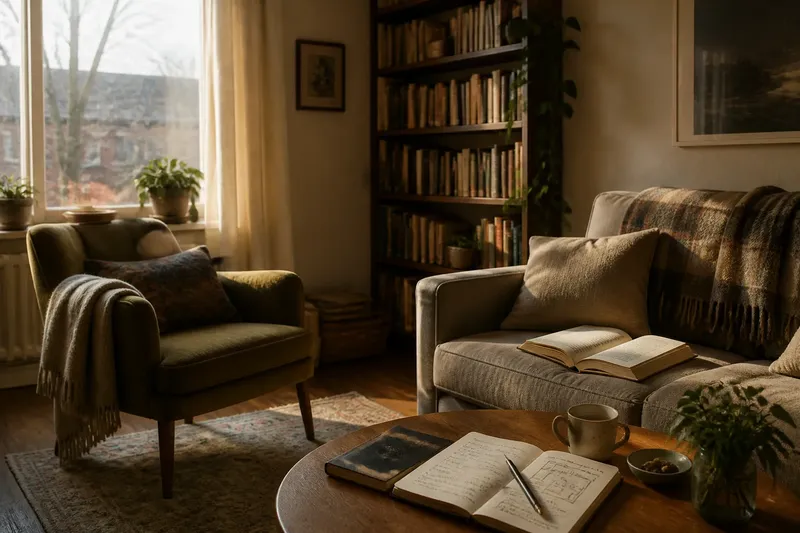
On a grey afternoon, a paperback lies open on the sofa, but the page feels dim even though the window is only a few steps away. Window light changes direction and quality over the day, and the room’s familiar arrangement can hide those shifts. A short seasonal observation exercise can reveal where a reading or resting spot feels most inviting without adding a lamp or moving every piece of furniture.
A room in winter
Say Mara lives in an invented, hypothetical situation: a small living room with a north-facing window, a sofa against the long wall, and an armchair near the bookcase. In early winter, she wants to use the armchair for reading and the sofa for a quiet afternoon rest, but both spots seem equally appealing when she chooses them by habit.
Instead of treating daylight as a fixed feature of the room, Mara decides to observe it across several ordinary days. Her question is modest: where does the window light reach, when does it arrive, and what does it feel like from a seated position?
The room’s existing surfaces matter. A pale wall may carry a soft glow after direct light has moved on; a dark bookcase can make the nearby corner feel subdued. Mara notes these effects as part of the room, not as evidence that she needs to repaint or replace anything.
Notes by the window
Mara chooses a few points in the day she can remember without setting alarms: morning, around midday, and late afternoon. At each point, she writes a brief note in a notebook and makes a small sketch of the room’s floor plan, marking where the brightest patch appears and which surfaces catch reflected light.
She records the weather and whether the window is shaded by curtains, a nearby building, or bare branches. Those details help distinguish a recurring pattern from a passing change. She does not need exact timestamps or a formal chart; a plain description such as “soft light on the rug, armchair seat still dim” is enough to compare later.
To keep the observation useful, Mara sits in each candidate spot rather than judging from the doorway. She checks whether the page is easy to read, whether the window is in her direct line of sight, and whether the light on the wall feels calm or distracting. For resting, she notices warmth, glare, and whether the seat feels exposed.
- Write down the season and the day’s general weather.
- Mark the location of bright patches and reflected light.
- Note which seat you occupied and what you were doing.
- Record glare, shadow, or discomfort rather than brightness alone.
- Repeat observations at familiar points in the day.
These notes are not a contest to find the brightest corner. A restful position may be one with indirect light and a clear view beyond the room, while a reading position may benefit from steadier illumination. The useful distinction is how the light serves the activity, not how dramatic it looks in a sketch.
What the notes reveal
After several days, Mara sees a pattern: the window’s strongest glow gathers near the bookcase in the morning, while the sofa receives a softer wash later in the day. On overcast afternoons, the armchair remains comfortable for resting but its page is harder to read. The sofa’s position gives the book more even light, even when the sky is dull.
She also notices that the bright patch is not the whole story. A white page reflects light back toward her eyes if she faces the window directly, while turning slightly toward the room makes reading more comfortable. The observation changes her understanding of the best seat: it is not simply the one nearest the glass.
The result is specific to this invented room and its season. In a south-facing room, a nearby tree or a deeper window recess could create a different pattern; a room with a neighboring building close by might receive mostly reflected light. The method remains the same, but the notes should describe the actual room rather than an idealized one.
Moving the existing seats
Mara tries a modest adjustment. She turns the armchair slightly toward the window and shifts it closer to the bookcase, keeping the route through the room clear. Then she places the sofa cushion she uses for resting where the late-day light feels softer, rather than moving the whole sofa at once.
She lives with the arrangement through another set of ordinary afternoons. The armchair now offers a better reading angle, though it still needs a reading lamp when the sky is especially dark. The sofa remains a comfortable resting place because its softer light does not fall directly across her face.
That is the expected observable result in Mara’s hypothetical situation: each spot has a clearer purpose, and the room’s existing furniture works with the daylight pattern rather than against it. The notes have not made daylight constant; they have helped her choose where to sit under the conditions she actually encounters.
There is little value in tracking every cloud or drawing an elaborate map. A small number of repeat observations is easier to use, and the room’s broad pattern matters more than a perfect record. If a seat feels uncomfortable despite the notes, that experience belongs in the decision too.
Seasonal questions?
How long should I observe window light?
Observe for enough ordinary days to notice a repeated pattern, rather than relying on one unusually bright or gloomy afternoon. If the season changes, repeat a few notes because the sun’s path and nearby foliage can alter the room’s light.
Does a north-facing room need a different method?
No special method is needed, but the room may offer more diffuse light and fewer sharply defined patches. Pay attention to reflected brightness, page readability, and how the seat feels through the day.
Should I move the chair closer to the window?
Only if the seat is comfortable there and the light suits its use. Test the angle from the chair itself; a position near the window can still bring glare, drafts, or an awkward view.
What if daylight is not enough for reading?
Use the notes to choose a sensible place for the chair, then consider a task light for darker conditions. For any lighting change, follow the product instructions and local requirements where they apply.
A place for each hour
Mara’s small rearrangement does not turn the room into a sunlit space at every hour. It gives her a useful choice: the armchair for reading when the window light supports the page, and the sofa for resting when the room settles into softer light. A season’s worth of modest observations can make window light easier to read, and help existing seats earn their place without chasing brightness for its own sake.