How Resilient Flooring Found Its Place in the Home
Resilient flooring connects linoleum’s patterned past with today’s choices, helping you compare materials and choose a finish that suits your room and daily routines.
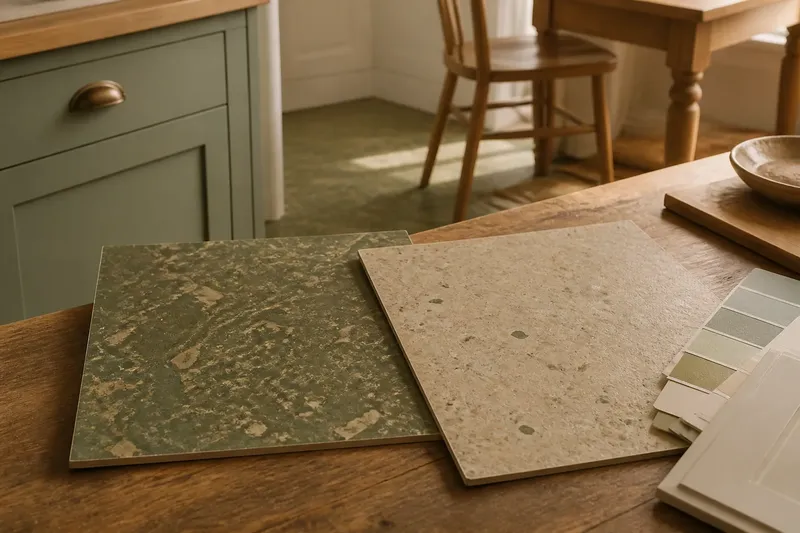
A faded floor sample tucked behind a kitchen cabinet can reveal more than its color: its pattern, texture, and seams hint at how the room was once meant to feel. Resilient flooring has long offered homeowners a way to shape that feeling with a continuous surface, though linoleum and vinyl arrive at their designs through different materials and methods.
The distinction matters when you are comparing an old floor with a new one. A wood-look print may suggest timber, and a mottled pattern may recall older linoleum, but appearance alone does not tell you how a product is made, installed, or cared for.
Linoleum’s domestic character
Linoleum is a manufactured floor covering traditionally made with ingredients such as linseed oil, cork or wood flour, and a backing. Its colors and patterns are generally formed within the material’s composition, rather than relying solely on a printed image on a synthetic sheet. Formulations and product construction can vary, so the exact product description matters.
In domestic rooms, a relatively continuous, smooth floor offered an alternative to surfaces that called for more frequent attention. Kitchens, halls, and work areas could use a practical covering that also brought color into interiors where furniture and decoration were often restrained. Linoleum did not have to imitate stone or timber; it could make its own graphic contribution.
Mottled or marbled designs can soften the look of ordinary marks compared with a very pale, uniform surface. Pattern also gives a room a deliberate rhythm, especially when cabinets and walls are simple. The effect depends on the particular design and the room around it, not just the material name.
Vinyl’s printed vocabulary
Vinyl flooring is a different material from linoleum, and its decorative options include printed designs that resemble tile, stone, or wood, as well as abstract patterns and strong colors. This gives a room another visual choice: a familiar-looking surface without installing the material it depicts.
That resemblance should not be mistaken for equivalence. A vinyl floor printed to suggest timber remains vinyl, with its own surface, installation requirements, and care directions. Linoleum and vinyl may both be sold as resilient flooring, but their composition and product specifications are not interchangeable.
Printed designs can either announce themselves or sit quietly within a room. A wood-effect floor may visually relate to timber cabinetry; a tile-like print may suggest a grid without using individual ceramic tiles. Compare samples against actual wood, grout, paint, and daylight, since a design that looks convincing alone can feel out of place beside real materials.
Choose for room character
If you want the floor to contribute visibly to the room, consider linoleum or another resilient product with a pattern that has a clear identity. A quiet speckle or measured geometric repeat can bring texture to a kitchen with plain cabinet fronts or a dining nook with simple furniture.
If you want to echo a finish already in the room, a printed vinyl design may suit that aim. Set the sample beside the existing timber, tile, or painted surfaces, and check it in daylight as well as under the lamps you use in the evening. The useful question is whether the relationship feels intentional, not whether the print perfectly imitates its reference.
An inherited floor, such as old boards or patterned tile, may already carry enough visual weight. A restrained resilient surface in an adjoining room can leave that feature in focus, while repeating a bold motif throughout may make the home feel busy.
When an older resilient floor may be worth preserving, photograph its pattern or retain a loose piece if it can be done safely. If its age or condition raises concerns, ask a qualified flooring professional how to assess it. Avoid disturbing uncertain flooring until you have appropriate guidance.
Pattern and room scale
Small flecks and softly irregular marks tend to read as texture from across a room. Large checks, diagonals, and repeated motifs are more likely to draw attention. Either can work: decide whether you want the floor to recede, organize the room, or provide its main decorative note.
In a narrow room, a directional pattern can pull the eye along its length, making the space feel more like a passage. In a compact kitchen, a busy all-over print may compete with cabinet fronts and everyday objects. A larger sample viewed in the room gives a better sense of visual weight than a small card.
Color affects the same relationships. A warm ground may sit comfortably beside timber and cream paint, while a cool gray or green may connect more naturally with steel, white cabinetry, or blue accents. Look at samples beside fixed finishes in daylight and under the room’s usual evening lighting.
Resilient flooring questions?
Is linoleum the same as vinyl?
No. They are distinct materials, although both belong to the resilient-flooring family and may be offered in sheet or tile formats. Check the exact product description rather than relying on its pattern or a broad sales label.
Which floor suits a quiet kitchen?
A subtle linoleum pattern or restrained vinyl design may work when cabinets and furnishings already carry visual detail. Choose according to the product’s care directions and whether you want the floor to read as a pattern or as a near-neutral background.
Can resilient flooring imitate wood or stone?
Some vinyl products use printed designs that resemble timber, stone, or tile. The image can create a visual link with other finishes, but it does not make the flooring the material it depicts.
What should I check before choosing a product?
Read the manufacturer’s information for the exact product, including its installation method, permitted room uses, cleaning directions, and requirements for the existing subfloor. If floor conditions are uncertain or building rules apply, consult a qualified professional.
Compare samples in context
Say you are refreshing a small kitchen with painted cabinets and a plain timber table, and want color without adding a crowded pattern. You place a quiet, warm-toned linoleum sample and a lightly speckled vinyl sample beside the cabinet paint and table finish, then view both in daylight and under the evening lamps. The linoleum reads as the stronger decorative feature, while the vinyl sits more quietly beside the table; if you prefer a floor with its own character, the first better fits that aim, but if you want a subdued background, the second is the clearer choice.
Before settling on either appearance, check the product information against the room’s use and installation conditions. A sample can help you judge color and pattern, but it cannot tell you whether the product suits the subfloor or how it must be installed.
Keep the choice grounded
Resilient flooring offers more than one visual approach: linoleum is associated with color and pattern formed within its material, while vinyl can carry printed appearances that evoke other finishes. For a room, the useful distinction is not simply old versus new; it is how each product’s actual character fits the space and its everyday use.
It is not worth chasing a supposedly period-perfect pattern if it clashes with the room or brings care demands you do not want. Resilient flooring is a useful search phrase when comparing options, but the exact product specifications and a sample viewed in your own light are better guides than a style label alone.