Why Clear Routes Make a Room Feel Easier to Use
Clear routes in a room reveal where movement gets awkward, helping you adjust furniture around daily activities instead of rearranging everything.
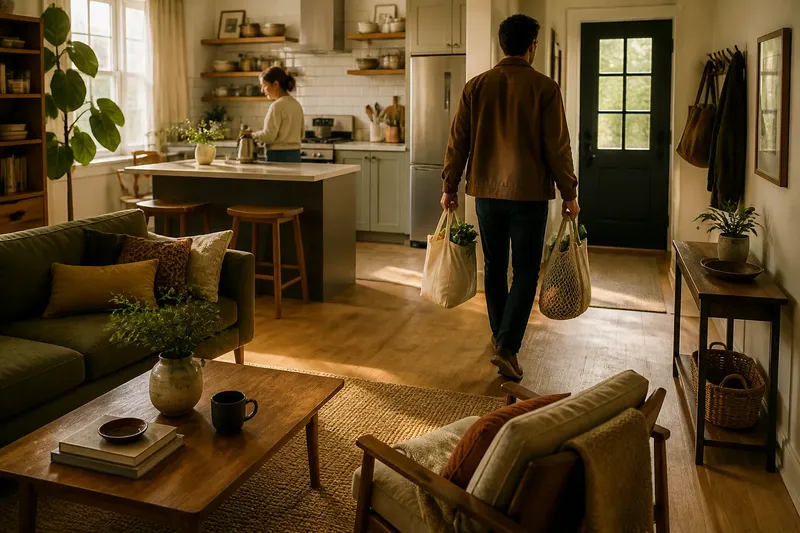
You come in carrying groceries, angle around a chair, then set the bags down because the counter is blocked by someone making tea. Clear routes in a room are not merely empty strips of floor; they show how people move between its activities and where the layout asks them to hesitate. Before shifting furniture, watch the ordinary traffic.
A room can look orderly in a photograph and still make daily tasks awkward. The useful question is not whether every piece has a tidy outline, but whether people can tell where to go and reach what they need without repeatedly detouring. That distinction makes small, targeted changes more sensible than starting over.
Start with observed movement
Notice the routes people already take: from the entry to a place to put down keys, from the sofa to the kitchen, or from a desk to a printer. Pay attention to pauses, sidesteps, and doors that cannot open fully. These are clues about the layout, not evidence that anyone is using the room incorrectly.
Observe at a few different moments, especially when more than one activity is happening. A path that seems open when the room is empty may become awkward when someone pulls out a dining chair or stands at a work surface. Keep the observation simple: identify where a person starts, where they are headed, and what interrupts the trip.
Say you notice that the route from the front door to the coat hooks bends around a narrow console. Imagine moving the console closer to the wall and placing a small tray on its far end; the expected result is a more direct walk and a clear place for keys, without changing the seating area. The point is to adjust the obstruction you saw, then watch whether that particular trip feels more straightforward.
When paths feel tangled
A route often feels tangled when furniture interrupts a line between two frequent destinations. A chair angled into the way, a table centered for appearance rather than use, or a storage basket left beside a doorway can turn a short trip into a repeated weave. The cause may be one misplaced edge, not the whole arrangement.
Try tracing the route with your eyes from its starting point to its destination. If a large piece blocks the view or forces a sharp turn, test moving only that piece a little at a time. Keep the route connected to the activity it serves: a path to a reading chair should not cut through the space where someone needs to stand to open a cabinet.
It is not worth the effort to make every route perfectly straight. Rooms have doors, windows, and useful furniture, and a gentle turn can be comfortable when the destination remains apparent. Focus on removing repeated obstacles and confusing crossings, not on drawing imaginary lanes across the floor.
When doorways become bottlenecks
Doorways and transitions between rooms can collect several competing demands. A door needs room to swing, a person may pause to remove shoes, and someone else may be trying to pass through. If the landing area is also used for bags or laundry, the trouble may come from the function assigned to that spot rather than the furniture elsewhere.
Notice whether the bottleneck happens only when a door is open, when an item is set down, or whenever two people cross paths. Then move the temporary clutter to a place that supports the task, or relocate a nearby piece that crowds the passage. Check the door’s full swing and the route beyond it before deciding the adjustment is sufficient.
For a narrow entry, a wall hook can sometimes keep a frequently used bag off the floor, while a shallow dish can gather small items without claiming a broad surface. Choose storage that matches what people actually bring in; a large catchall can become another obstacle if it invites things to accumulate in the passage.
When activities interrupt each other
Some rooms serve as living space, work area, and route to another part of the home. A clear path can still feel inconvenient if it cuts through an activity: someone walking to the bedroom may pass directly behind a person at a desk, or the route to the kitchen may cross the spot where children spread out a game.
Look for the moment when one activity makes another pause. The furniture may need to mark a more legible edge between uses, or an item used for one activity may belong nearer its destination. A book basket beside the reading chair, for instance, can prevent trips across the room to retrieve materials, provided it does not narrow the main passage.
Keep the most frequent through-route easy to recognize, while allowing less-used activities to occupy secondary corners. This does not require a partition. The direction of a sofa, the position of a desk, or the placement of a small storage piece may signal where one activity ends and another begins.
Questions about room routes?
How can I tell which path matters most?
Start with repeated trips tied to everyday needs, such as entering, sitting down, reaching storage, or leaving the room. A route used only occasionally may be less urgent than one that people cross throughout the day.
Should I move furniture before measuring?
Begin by observing and checking how doors, drawers, and chairs are used. If an adjustment seems promising, move one non-fixed piece temporarily and see whether the route improves during the activity that prompted the change.
What if several routes cross?
Identify the destinations and notice whether the crossing causes an actual pause or merely looks busy. If people keep meeting at the same spot, shift one activity or its supporting furniture so the paths do not converge at that pinch point.
Can a room feel open but still be hard to use?
Yes. Open floor area does not necessarily point toward useful destinations, and a room may lack a clear approach to a chair, cabinet, or doorway. Observe where people hesitate rather than judging the layout by how much floor is visible.
Make one change at a time
Once you have identified a trouble spot, alter one nearby element and observe the same route again. Changing several pieces at once can make it harder to tell which adjustment helped, while a modest trial keeps the rest of the room available for ordinary use. If the route improves but another task becomes awkward, that new conflict is useful information for the next adjustment.
Keep the purpose of the route in view: people should be able to recognize where they are going and reach it without unnecessary weaving. Clear routes in a room are built from that kind of attention, not from a universal furniture map. After the main passage works, check the small transitions too: a chair that can be pulled back, a cabinet that can be opened, and a place to set something down can make the room easier to use without another sweeping rearrangement.